Apr 30, 2009
Contraction
The Denver Post has cut home delivery to most outlying areas in Colorado on all days but Sunday. AP


Justice Souter to retire
Supreme Court Justice David Souter today announced plans to retire at the end of the current term. NPR
California's tireless Attorney General
Somehow a thief made off with two tires from Attorney General Jerry Brown's Toyota Prius Camry hybrid while the car was parked in front of Oakland City Hall. Did the thief leave the wheels? San Jose Mercury News
Two departures at the Daily Journal
The Los Angeles Daily Journal will lose two journalists tomorrow. Associate Editor Daniel Yi, who started at the paper in January, is leaving to flak for the Port of Long Beach. LA Observed published his goodbye email yesterday.
Also leaving, Superior Court reporter Cortney Fielding, who decided she'd be better off striking out on her own. Fielding, who went to the DJ in January 2008 from the Pasadena Star-News, plans to freelance for now. From her parting email:
Also leaving, Superior Court reporter Cortney Fielding, who decided she'd be better off striking out on her own. Fielding, who went to the DJ in January 2008 from the Pasadena Star-News, plans to freelance for now. From her parting email:
...leaving was a tough decision. I’ve loved working with everyone here and really enjoy covering LA courts, but curiosity has gotten the better of me. I want to see what, if anything, I can accomplish out on my own and maybe catch my breath a little while figuring out what I want to do next in this business.The rest of the email is here.
Granted, this is something I probably couldn’t do if I hadn’t had the foresight to marry a man who would one day collect a stable paycheck from a boring old insurance company, so props go to me for that.
I got into journalism because I enjoyed storytelling and lacked the imagination necessary to make stories up myself. Why bother when there is already so much great material ripe for the picking? I plan on continuing to tell other people’s stories. I’ve gotten a few cool freelance gigs to get me started, and I’m working on some bigger projects I’ll tell everyone about after they are more certain-so I don’t look like a total loser if they fall through.
But, if by the end of the year, I’m calling you as a PR person trying to pitch a story about an amazing law firm’s ground-breaking swine-flu practice, I guess we will know this was a very,very bad idea.
Apr 29, 2009
The new (il)literacy
Finally, someone has put together a college course to prepare us for the future, which, as everyone knows, is now. From McSweeney's:
Course Description
As print takes its place alongside smoke signals, cuneiform, and hollering, there has emerged a new literary age, one in which writers no longer need to feel encumbered by the paper cuts, reading, and excessive use of words traditionally associated with the writing trade. Writing for Nonreaders in the Postprint Era focuses on the creation of short-form prose that is not intended to be reproduced on pulp fibers.
-snip-
Prerequisites
Students must have completed at least two of the following.
ENG: 232WR—Advanced Tweeting: The Elements of Droll
LIT: 223—Early-21st-Century Literature: 140 Characters or Less
ENG: 102—Staring Blankly at Handheld Devices While Others Are Talking
ENG: 301—Advanced Blog and Book Skimming
ENG: 231WR—Facebook Wall Alliteration and Assonance
LIT: 202—The Literary Merits of Lolcats
LIT: 209—Internet-Age Surrealistic Narcissism and Self-Absorption
Read the full course description, or sign up for classes by clicking here (via fishbowlLA).
Keeping up with: Rep. Jane Harman
The Rep. Jane Harman wiretap story just keeps crawling deeper and deeper into the labyrinth. The most recent revelations:
Gene Maddaus at the Daily Breeze reports that Harman has challenged CQ columnist Jeff Stein, who broke the story, to a road race. Her attempt to show she's taking things in stride seems misguided - shouldn't she be challenging ex-CIA Director Porter Goss?
Laura Rozen at Foreign Policy reports that Harman, desperate to smother any more bad news, has hired former Clinton adviser Lanny Davis as her media adviser. Rozen's piece also includes a summary of the political backstabbing behind the wiretap story - which reveals a disturbing level of political gamesmanship among people entrusted with America's safety.
Gene Maddaus at the Daily Breeze reports that Harman has challenged CQ columnist Jeff Stein, who broke the story, to a road race. Her attempt to show she's taking things in stride seems misguided - shouldn't she be challenging ex-CIA Director Porter Goss?
Laura Rozen at Foreign Policy reports that Harman, desperate to smother any more bad news, has hired former Clinton adviser Lanny Davis as her media adviser. Rozen's piece also includes a summary of the political backstabbing behind the wiretap story - which reveals a disturbing level of political gamesmanship among people entrusted with America's safety.
Whittier striken with oil fever
Struggling with the loss of tax-producing auto malls and retail outlets, the city of Whittier wants to turn back the clock to an old way of striking it rich. From the Wall Street Journal:
The five biggest car dealerships here went belly up in the space of a year. The Mervyns department store was liquidated. And the city is so strapped for cash it has pulled the plug on its Fourth of July fireworks.But now this Los Angeles suburb thinks it has found the answer to its troubles: It's going to drill, baby, drill.
It's not unusual to see working oil derricks in the midst of L.A.'s suburban sprawl. A century ago, Whittier was dotted with oil wells, but that came to an end in 1993, the WSJ reports, when Chevron turned its field over to the city. Hard times and high oil prices provided Mayor Bob Henderson with a revelation:
The Whittier Daily News reported yesterday that a Santa Barbara company filed for permission to drill in the city. Officials think they can earn about $5 million a year from the operations."I was sitting at home, just idly thinking about this possibility of oil drilling and suddenly thought: 'Oh, my God, when I purchased the old Chevron property, we demanded they give us the oil rights.'"
The demand was made so Whittier could convert the area into a wilderness preserve. Says Mr. Henderson: "It's home to an awful lot of animals -- bobcats, coyotes, hundreds of birds."
Apr 28, 2009
DOJ questions Google's online library
The Justice Department has opened an inquiry into an agreement that gives Google exclusive rights to publish millions of books online. The New York Times reports:
The inquiry does not necessarily mean that the department will oppose the settlement, which is subject to a court review. But it suggests that some of the concerns raised by critics, who say the settlement would unfairly give Google an exclusive license to profit from millions of books, have resonated with the Justice Department.
Here come the scaremongers
It was probably inevitable that some anti-immigrant voices would recast the swine flu as a Mexican disease. Tea party booster Randy Thomasson of SaveCalifornia/SaveAmerica goes so far as to rename the virus the "killer Mexican flu," urging President Barack Obama to close the border and quarantine anyone arriving here from there, whether by sea, land or air.
"For the love of people created in the image of God, President Obama must close the border now and take tough steps to curtail this virus."He's not anti-Mexican, he's just anti-flu.
Four in the evening
1. A memorable lede. New York Magazine
2. California's April tax receipts are underwhelming (i.e., budget trouble ahead). California's Capitol
3. Warren Buffet saw trouble for newspapers in 1992. It's a franchise thing. Slate
4. As newspapers shrink, someone at least is reporting neighborhood crime in Los Angeles. Eastsider LA
2. California's April tax receipts are underwhelming (i.e., budget trouble ahead). California's Capitol
3. Warren Buffet saw trouble for newspapers in 1992. It's a franchise thing. Slate
4. As newspapers shrink, someone at least is reporting neighborhood crime in Los Angeles. Eastsider LA
As the NYT goes...
The New York Times Co. has reached a tentative agreement with the union at the New York Times to cut worker pay by 5 percent. This follows the wage cut/furlough instituted for non-union employees last month.
(via Romenesko)
(via Romenesko)
Watch your language
The US Supreme Court today ruled that the Federal Communications Commission can regulate foul language on the public airwaves through hefty fines. From the LAT:
In a 5-4 decision, the justices said federal law has long prohibited the broadcast of "indecent" language, and they said the Federal Communications Commission had ample authority to crack down on what Justice Antonin Scalia called the "foul-mouthed glitteratae from Hollywood."The ruling does not address whether FCC policies violate First Amendment protections - an issue that's likely to be tested in upcoming court battles - and the ruling does not apply to cable or Internet television.
Circulation down in the IE
Daily newspapers covering the Inland Empire saw significant declines in circulation over the last six months, according to the latest ABC survey. The Riverside Press-Enterprise dropped 14.6 percent, putting the Monday through Friday circulation at 140,079 and the Sunday circulation at 147,339.
The P-E, which has suffered several rounds of layoffs in recent weeks, touted a 5-percent gain in its "total audience" share, which includes online readers.
The Press-Enterprise also reported drops in circulation for its main competitors, but did not include any online-audience numbers in the story. From the P-E:
The average drop in print circulation nationwide was 7.1 percent.
The P-E, which has suffered several rounds of layoffs in recent weeks, touted a 5-percent gain in its "total audience" share, which includes online readers.
The Press-Enterprise also reported drops in circulation for its main competitors, but did not include any online-audience numbers in the story. From the P-E:
I haven't seen numbers for the rest of LANG yet.The San Bernardino Sun, owned by Media News Group, saw circulation decline 8 percent to 49,952 Monday through Friday and 3.4 percent to 55,746 on Sunday.
The Inland Valley Daily Bulletin, the Media News paper in Ontario, dropped 9.1 percent to 48,954 weekdays and 10.8 percent to 52,616 on Sunday.
Redlands Daily Facts, also owned by Media News, dropped 2.5 percent to 6,916 weekdays and 2 percent to 7,012 Sundays.
The average drop in print circulation nationwide was 7.1 percent.
Specter breaks with GOP
 Pennsylvania Sen. Arlen Specter announced this morning that he's leaving the Republican Party to become a Democrat. Specter faced a tough challenge from the right in the 2010 senate primary race, so this gives him a chance of winning re-election. In his statement, however, Specter blames the switch on a "schism" that opened when he voted in support of President Barack Obama's stimulus plan. Specter's switch gives Democrats 59 seats in the U.S. Senate - and 60 if Al Franken gets the seat in Minnesota (which he will). Sixty, of course, is the magic number for ending filibusters.
Apr 27, 2009
Carona gets prison
Former Orange County Sheriff Michael Carona was sentenced today to 5 1/2 years in prison for witness tampering, the Los Angeles Times reports.
Buyouts buy time to try online
The newsroom purge last fall at the Star-Ledger in New Jersey has spawned a website, newjerseynewsroom.com, run by about 40 former staffers - all of them took lucrative buyouts from owner Advance Publications, aka Newhouse. The site is a mix of original reporting and links, some provided through a deal with Voice of America, Editor and Publisher reports.
None of the writers are being paid just yet. It was the buyouts that have provided the cushion to allow the start up to keep going, according to former sports writer Matt Romanoski. From E&P:
None of the writers are being paid just yet. It was the buyouts that have provided the cushion to allow the start up to keep going, according to former sports writer Matt Romanoski. From E&P:
Romanoski says the beauty of the start-up is that contributors can work without pay, to start, and rely on their buyout payments. Some have outside jobs and contribute one or two stories per week.
"No one is being paid as of now, we are giving equity and hoping to secure revenue," he said.
Good-ish news for smaller papers
All but one of the largest 25 newspapers in America lost circulation, according to the latest Audit Bureau of Circulations survey. But Editor and Publisher combed through the data and found some papers have made significant circulation gains. Here's the list as compiled by E&P:
MEMPHIS COMMERCIAL APPEAL -- 192,631 -- 30.96%The news isn't all good, unfortunately. The spike in circulation at the Commercial Appeal, for example, is almost completely a result of Newspaper in Education programs, E&P reports. Individual paid subscriptions actually dropped 14 percent at the paper.
WISCONSIN STATE JOURNAL -- 96,927 -- 10.32%
YORK (PA.) DAILY RECORD -- 52,330 -- 9.05%
FARGO (N.D.) FORUM -- 52,593 -- 8.90%
WOMEN'S WEAR DAILY -- 50,805 -- 8.72%
MOBILE (ALA.) PRESS-REGISTER -- 106,793 -- 7.40%
SPRINGFIELD (ILL.) STATE JOURNAL-REGISTER -- 51,453 -- 3.23%
RECORD (N.J.) -- 168,508 -- 3.17%
ERIE (PA.) TIMES-NEWS -- 57,096 -- 3.07%
CHATTANOOGA (TENN.) TIMES FREE PRESS -- 73,067 -- 1.88%
Four in the morning
Condé Nast announced today that it will shutter the business magazine Portfolio, a mere two years after the magazine was launched. WaPo (h/t LA Observed)
The Center for Responsibility and Ethics in Washington (aka CREW) has called for an investigation into the favorable terms of an FDIC contract awarded to real-estate giant CB Richard Ellis. The company is chaired by Richard Blum, husband of Sen. Dianne Feinstein. CREW
The San Gabriel Valley Tribune/Pasadena Star-News focuses in on state Sen. Gil Cedillo's penchant for lavish spending on staff gifts, using campaign funds. The story follows a Los Angeles Times examination of Cedillo's use of campaign funds for gifts, travel and meals. PSN
ABC reports big drops in circulation for many big newspapers. Editor & Publisher
The Center for Responsibility and Ethics in Washington (aka CREW) has called for an investigation into the favorable terms of an FDIC contract awarded to real-estate giant CB Richard Ellis. The company is chaired by Richard Blum, husband of Sen. Dianne Feinstein. CREW
The San Gabriel Valley Tribune/Pasadena Star-News focuses in on state Sen. Gil Cedillo's penchant for lavish spending on staff gifts, using campaign funds. The story follows a Los Angeles Times examination of Cedillo's use of campaign funds for gifts, travel and meals. PSN
ABC reports big drops in circulation for many big newspapers. Editor & Publisher
Apr 26, 2009
Working out the kinks
California pulled the plug on an employee training program after a public records request from a San Francisco Weekly writer revealed cash was going to teach post-production techniques to workers at a fetish-porn website.
Apr 25, 2009
Four in the evening
Armenian community in Glendale suspicious of warming diplomatic relations between Armenia and Turkey. WSJ
Book festivals can be dangerous. LAT
If you can find a single practical idea in here, you win a coke. CJR
8,484 and counting. Paper Cuts
Book festivals can be dangerous. LAT
If you can find a single practical idea in here, you win a coke. CJR
8,484 and counting. Paper Cuts
Apr 24, 2009
Downgrades at NYT, McClatchy
Moody's has lowered the debt ratings for two of the country's largest newspaper companies, McClatchy and New York Times Co. The New York Times, which suffered a $74.5 million loss in the first quarter, drops to a B1 rating. McClatchy, which lost $37.5 million in the first three months of the year, slipped to Caa1.
Daily News update*, **
The Los Angeles Daily News appears to be moving ahead with layoffs today. LA Observed reports that Senior Editor Oscar Garza was felled by the axe. The union had been told five newsroom staffers would be cut today.
*LA Observed has updated information about today's cuts. Two reporters, Brandon Lowrey and Jerry Berrios, got pink slips and photographer Tina Burch took a buyout. LAO also reports that three editors were reassigned to the Metro desk.
**Updated 4/25: Add staff artist Jon Gerung to the list of those laid off yesterday. That from the union's Daily News[room] blog, which also includes rumors of more layoffs as early as next week. Here's a portion of the goodbye letter Brandon Lowrey sent to his soon-to-be former colleagues:
*LA Observed has updated information about today's cuts. Two reporters, Brandon Lowrey and Jerry Berrios, got pink slips and photographer Tina Burch took a buyout. LAO also reports that three editors were reassigned to the Metro desk.
**Updated 4/25: Add staff artist Jon Gerung to the list of those laid off yesterday. That from the union's Daily News[room] blog, which also includes rumors of more layoffs as early as next week. Here's a portion of the goodbye letter Brandon Lowrey sent to his soon-to-be former colleagues:
Even as a pretty idealistic young guy, I can't deny times are depressing for our industry. Reporters are unappreciated and undervalued, both by corporate bigwigs and many in the public. I can see how some can become cynical and jaded.
But the very fact that you all keep doing is inspirational. It reminds me that there are good, smart and reasonable people out there who really want to change the world - or at least their corners of it - for the better.
Climbing a mountain
Against fast and freezing winds and waist deep snow, Nicholas Rice continues his trek up Manaslu in Nepal. Rice today spoke by satellite phone to Guy McCarthy at Watershed News from base camp.
Gonzo helped Harman
The New York Times confirms that Attorney General Alberto Gonzales intervened in a wiretap inquiry involving Rep. Jane Harman. From the NYT:
The director of the Central Intelligence Agency concluded in late 2005 that a conversation picked up on a government wiretap was serious enough to require notifying Congressional leaders that Representative Jane Harman, Democrat of California, could become enmeshed in an investigation into Israeli influence in Washington, former government officials said Thursday.
But Attorney General Alberto R. Gonzales told the director of the agency, Porter J. Goss, to hold off on briefing lawmakers about the conversation, between Ms. Harman and an Israeli intelligence operative, despite a longstanding government policy to inform Congressional leaders quickly whenever a member of Congress could be a target of a national security investigation.
Four in the morning
National Public Radio plans to layoff 13 employees and institute furloughs for rest of its workers. In addition, NPR will eliminate three paid holidays from its calendar. WaPo
The Wall Street Journal has put together a graphic documenting the biggest cuts at the biggest daily newspapers across the country. WSJ
Journalists who don't want to actually go into the streets to find a man on the street can rent one instead from journopimp HARO. ROAN
The New York Times and the Boston Globe head to a May 1 showdown. Boston Globe
The Wall Street Journal has put together a graphic documenting the biggest cuts at the biggest daily newspapers across the country. WSJ
Journalists who don't want to actually go into the streets to find a man on the street can rent one instead from journopimp HARO. ROAN
The New York Times and the Boston Globe head to a May 1 showdown. Boston Globe
Apr 23, 2009
More jailed journalists
The case of jailed journalist Roxana Saberi has made headlines around the world, but two other journalists, Laura Ling and Euna Lee, jailed in a different "axis of evil" country, have hardly received the same level of attention. Alan Mutter explains why. (Read the Associated Press story.)
Surreality
Eric Alterman captures it:
The men and women who continue to work in the newspaper business inhabit a surreal world. It's as if they are organisms inside a body felled by a fatal disease, and all the doctors prescribe is more poison. Charge for individual articles on the web? That would just send people to the free stuff. Demand that Google compensate the newspapers for the links? Watch your stories disappear when they stop coming up in Google searches. Stop publishing a print edition? Lose what's left of your only significant earnings base. Oh well--there's always more room for deeper budget cuts, more section cuts, more buyouts, fewer editors, etc.
Plans for Denver news site stall
Efforts to launch InDenver Times, an online news site that would be staffed by former employees of the Rocky Mountain News, appear to have stalled after prospective financial backers walked away from negotiations. The Denver Post reports that "employees want to go on with the site and will search for new backers," although they've dropped the awkward name. According to the story, investors felt a staff of 30 was just too large. (Denver Post via Romenesko)
Klein gets post at Post
Irvine native, UCLA grad and "liberal darling" Ezra Klein is moving his blog from American Prospect, where's he's listed as associate editor, to the Washington Post.
Deadline day at the Daily News
In a last-ditch attempt to avert another round of newsroom layoffs, guild members at the Los Angeles Daily News have asked management to let them voluntarily cut back their work hours. The Daily News plans to fire five staffers today - two staffers have reportedly accepted buyouts - as part of a plan to slash 15 percent from the newsroom budget. In an email to LA Observed, a guild member says wage cuts might still be on the table at the Daily News - althought it's left unclear to me whether this will happen despite, or in lieu of, layoffs.
Apr 22, 2009
High in the Himalayas
 Watershed News is tracking the progress of 24-year-old Nicholas Rice of Hermosa Beach as he attempts to solo Manaslu, the eighth highest peak in the world, in the Himalayas. Rice was climbing K2 nine months ago when 11 people died in "one of the deadliest episodes in recent mountaineering history."
(Photo 'borrowed' from Watershed News)
Freddie Mac CFO dead in apparent suicide
The body of David Kellermann, acting chief financial officer at mortgage-finance giant Freddie Mac, was found in the basement of his Virginia home, ABC News reports. Police say there were no signs of foul play and the cause of death was still under investigation:
From ABC News:
From ABC News:
According to securities reports filed in March, Kellermann was to receive an $850,000 bonus.In filings with the Securities and Exchange Commission in March, Freddie Mac said it had entered into a pact with Kellermann and two other executives to protect them from liabilities and expenses in connection to any threatened or pending lawsuits. The agreement, which kicked in retroactively from the time of the government takeover, would not protect the officials from willful criminal misconduct.
Apr 21, 2009
P-E update
It appears that 14 people got laid off from the Press-Enterprise newsroom in the latest round of cuts, most of them from the copy desk, which is now down below 20 people. In addition, another two long-time journalists, City Hall reporter Doug Haberman and Director of Photography Gary Miller, announced plans to resign.
*This post has been edited
*This post has been edited
In search of authority
Writing in the American Spectator, James Srodes, former Washington bureau chief for Forbes, says good riddance to newspapers, "an industry that has outdone Detroit in wasting its franchise". He says journalism got taken over by "cretins" who thought they were manufacturing a product and forgot they were providing a service.
Srodes writes:
Srodes writes:
In manufacturing, say widgets, if you can make the same number of widgets with fewer workers and a leaner mix of raw materials the productivity gain will translate into expanded profits. But if one starts watering down a service with fewer providers, with stingier resources, and empty information calories instead of the news nourishment consumers want, well then one deserves what one gets.So when once-great newspapers (and I count the Washington Post among them) systematically empty their newsroom of truly first-class news gatherers, and when the product that results is the work of lower-wage naifs who lack sources and perspective, who confuse skepticism with partisanship, who substitute snark for insight, then what in the pluperfect hell does management expect to happen? Why should advertisers spend their dollars pitching to a room that is rapidly emptying of potential customers?
Harman talks about wiretap*
MSNBC's Andrea Mitchell scored the first interview with Rep. Jane Harman, D-El Segundo, about yesterday's Congressional Quarterly story. An NSA wiretap (some say it was the FBI) recorded a conversation in which Harman allegedly discussed a quid pro quo deal with a "suspected Israeli spy" while she was trying to get appointed chairwoman of the House Intelligence Committee. Harman adamantly denies doing anything wrong.
*Update: Gene Maddaus at the Daily Breeze is following every twist at turn at the paper's Pipeline blog.
*Update: Gene Maddaus at the Daily Breeze is following every twist at turn at the paper's Pipeline blog.
Sun on the Sun
The Las Vegas Sun recounts the day that it won the Pulitzer Prize. The story is by Marshall Allen, formerly of the Pasadena Star-News.
Apr 20, 2009
Daily News considering more cuts
Earlier this month, Los Angeles Daily News management floated the idea of salary cuts to trim 15 percent from the paper's newsroom budget. Now it appears layoffs are the preferred way to go. The union representing journalists at the paper sent out a memo today to members warning them that as many as five people could be fired by the end of the week.
From the memo:
From the memo:
We learned this morning that management at the Los Angeles Daily News intends to layoff five people from the newsroom by the end of the week. Three metro reporting positions, one photographer and one graphic artist will be cut.
As the cuts move forward, we have been told that some managers will be demoted and placed in non-management positions, though we are waiting for more details.
These cuts are the result of a newsroom budget cut of 15 percent, as we previously reported. An informal survey of guild members led us to propose possible furloughs in lieu of layoffs. We are waiting to hear back from management.
Pulitzer prizes*, **
The Las Vegas Sun won the coveted Public Service award for a series on construction deaths on the Las Vegas Strip.
(Marshall Allen, my former colleague at the Pasadena Star-News and now a Sun reporter, had this to say when I congratulated him: "We're stunned." I'm also told that, as of 12:30 p.m. Pacific, the lead reporter is out of the office with her cell phone off and so doesn't even know she's won yet. 12:39 p.m.: Alexandra Berzon just arrived at the office to a round of applause.)
Bettina Boxall and Julie Cart of the Los Angeles Times won for explanatory reporting for their stories studying the effectiveness of strategies to battle Western wild fires.
The New York Times racked up the highest number of awards, with five, including one for breaking the Eliot Spitzer call-girl scandal.
The list of winners is here. A fuller explanation of what each paper won for is here.
*This post has been updated.
**Update, two: Two Pulitzer notes to consider. The first comes from Mark Lacter at LA Biz Observed. He noticed that none of the awards were for coverage of the financial collapse. I'd picked Gretchen Morgenson as a favorite.
The second, and sadder, note comes from Portfolio, which reports that two of the Pulitzer winners, both from the East Valley Tribune in Arizona, were laid off late last year.
(Marshall Allen, my former colleague at the Pasadena Star-News and now a Sun reporter, had this to say when I congratulated him: "We're stunned." I'm also told that, as of 12:30 p.m. Pacific, the lead reporter is out of the office with her cell phone off and so doesn't even know she's won yet. 12:39 p.m.: Alexandra Berzon just arrived at the office to a round of applause.)
Bettina Boxall and Julie Cart of the Los Angeles Times won for explanatory reporting for their stories studying the effectiveness of strategies to battle Western wild fires.
The New York Times racked up the highest number of awards, with five, including one for breaking the Eliot Spitzer call-girl scandal.
The list of winners is here. A fuller explanation of what each paper won for is here.
*This post has been updated.
**Update, two: Two Pulitzer notes to consider. The first comes from Mark Lacter at LA Biz Observed. He noticed that none of the awards were for coverage of the financial collapse. I'd picked Gretchen Morgenson as a favorite.
The second, and sadder, note comes from Portfolio, which reports that two of the Pulitzer winners, both from the East Valley Tribune in Arizona, were laid off late last year.
John Kerry to the rescue
Erstwhile presidential hopeful Sen. John Kerry plans to hold hearings next week on the state of the newspaper industry. (via Romenesko)
Sticky subscriptions
Gawker says the Los Angeles Daily News is making it difficult for customers to cancel their subscriptions.
Rep. Harman allegedly caught in wiretap*, **
 A National Security Administration wiretap caught Rep. Jane Harman, D-El Segundo, allegedly making a quid pro quo deal with a "suspected Israeli spy" while she was trying to get appointed chairwoman of the House Intelligence Committee (the position would go to Rep. Silvestre Reyes of Texas). From CQ Politics:
Rep. Jane Harman, the California Democrat with a longtime involvement in intelligence issues, was overheard on an NSA wiretap telling a suspected Israeli agent that she would lobby the Justice Department to reduce espionage-related charges against two officials of the American Israeli Public Affairs Committee, the most powerful pro-Israel organization in Washington.Of course, this raises many question - not the least of which is: How did it come about that an NSA writetap was recording a phone call to a member of Congress? (h/t Talking Points Memo)
Harman was recorded saying she would “waddle into” the AIPAC case “if you think it’ll make a difference,” according to two former senior national security officials familiar with the NSA transcript.In exchange for Harman’s help, the sources said, the suspected Israeli agent pledged to help lobby Nancy Pelosi , D-Calif., then-House minority leader, to appoint Harman chair of the Intelligence Committee after the 2006 elections, which the Democrats were heavily favored to win.
*Update: The Capital J questions the timing of these leaks.
**Updated, two: Jeff Stein joined Warren Olney on "Which Way, LA?" today to talk about his story. You can hear the interview tonight at 7:30 p.m. on KCRW 89.9 FM, or download it here.
Apr 19, 2009
One for all
Tomorrow, April 20, is the first day of the Los Angeles Newspaper Group's universal copy desk experiment. Copy editors from the Daily Breeze, Press-Telegram and Daily News will now make the daily commute to West Covina to join a single news desk serving LANG's nine newspapers. It will be interesting to see how this works out, and whether more consolidation plans are in the works.
Author of "Crash," "Empire of the Sun" has died*
Novelist J.G. Ballard died this morning. He had cancer. He was 78.
*Updated: The New Yorker remembers Ballard
*Updated: The New Yorker remembers Ballard
Apr 18, 2009
For sale: Texas (shipping not included)
Why secede when you can sell - and help pay down the national debt in the process)? Before Gov. Rick Perry can make do on his threat to unhitch Texas from the Union, an alert eBayer has opened a bidding war for the Lone Star State - all 268,820 square miles of it. (h/t TPM)
*Nate Silver at FiveThirtyEight says Democrats should take a second look at Perry's secession idea. Among the considerations: A filibuster proof majority in the Senate.
*Nate Silver at FiveThirtyEight says Democrats should take a second look at Perry's secession idea. Among the considerations: A filibuster proof majority in the Senate.
Iran sentences U.S. journalist to 8 years in prison
An Iranian court today sentenced American-born journalist Roxana Saberi to eight years in prison after trying her in secret on charges of spying for the United States. Secretary of State Hillary Clinton responded by saying she was "deeply disappointed" with the decision. An unnamed analyst told Reuters that the sentence "was likely to be commuted or reduced in a higher court."
The New York Times quotes an unnamed analyst saying the entire incident might be part of a plan to derail diplomatic talks between Iran and the United States.
From the NYT:
Time magazine's Scott MacLeod has some thoughts on the conviction here.One political analyst in Iran, who spoke on the condition of anonymity because of the delicate subject matter, said Ms. Saberi’s arrest could be part of the efforts by radical forces within the establishment who might be trying to sabotage any reconciliation with the United States.
“There have been similar efforts in the past to sabotage efforts that were aimed at resuming ties with the United States,” he said. “Her jailing might be part of the same efforts."
Apr 17, 2009
Police privacy trumps public interest
 Over the objections of the Pasadena city attorney and Pasadena police chief, Superior Court Judge David Yaffe ruled Thursday that the names of the two Pasadena police officers who shot and killed a man must be kept confidential. The police officers' union filed the lawsuit to prevent the names from being disclosed.
From the Times:
Richard Shinee, an attorney for the union, said that the officers' privacy rights should take priority.The Los Angeles Times, the California Newspaper Publishers Association and the city of Pasadena argued that the names should be made public.
"The safety of the officers always outweighs the need of the public," he said, adding that the public's interest in such matters was "idle curiosity, as far as I'm concerned."
"That anyone in a position of authority can kill someone and have their identity kept secret is fundamentally inconsistent with our notion of democratic government," attorney Kelli Sager said after the hearing.Pasadena Star-News
Journeyman journalist leaving P-E*
Reporter Doug Haberman, who has covered Riverside City Hall for the Press-Enterprise since 2004, told friends in a recent email that he plans to leave the paper - and journalism - on May 15. He and his wife are moving to Phuket, Thailand, where they'll both teach at a nonprofit American international school.
"We are going to be empty nesters starting in August so it was a good time for an adventure like this and it's a good time to leave the newspaper business, as you know," Haberman said.
The paper has yet to decide on a replacement.
Haberman has worked in newspapers for nearly two decades. Before heading to the P-E, he worked at the now-defunct Inland Valley Times, which is where I first met him.
*Updated 4/18: I'm told Gary Miller, director of photography at the P-E, has also decided to resign his position at the paper.
"We are going to be empty nesters starting in August so it was a good time for an adventure like this and it's a good time to leave the newspaper business, as you know," Haberman said.
The paper has yet to decide on a replacement.
Haberman has worked in newspapers for nearly two decades. Before heading to the P-E, he worked at the now-defunct Inland Valley Times, which is where I first met him.
*Updated 4/18: I'm told Gary Miller, director of photography at the P-E, has also decided to resign his position at the paper.
Breaking: Partisanship will survive the death of newspapers
 Was someone worried Daily Kos would disappear if newspaper journalism dried up? Apparently, because founder Markos Moulitsas decided he should do a little research to determine just where the popular progressive blog gets the information it react to.
Moulitsas mined six days of material (April 6-12) and discovered a majority of posts used newspapers as a primary or secondary source (102 primary, 21 secondary), followed by blogs (83 primary, 19 secondary).
His conclusion: "In the unlikely and tragic event that every single newspaper went out of business today, we'd have little problem replacing them as a source of information."
My conclusion: So what?
The whole evaluation here is based on a flawed assumption. Information flows in torrents and anyone with a cup can fill theirs for free. Newspapers do not make information, they gather it from many streams and sources to make meaning. They pay people to return over and over to the same sources of information to look for nuance or inconsistencies. They take risks to get at streams that others don't want them to see or that originate in places most others dare not travel to. At their best, newspapers also hold back mighty flows of misinformation, opinionation, and sundry nonsense unleashed by powerful, the partisan and the self-interested.
Newspapers (as a concept, not as a printed object) attempt to be stewards of information for the good of the general public; Daily Kos, and publications like it, use information to push their agenda. One is not a substitute for the other, but in the hierarchy of democracy the former is by far the more precious commodity. So maybe the metric that matters is how often Daily Kos is a primary or secondary source for newspapers - and let's all just agree that opinion is in no danger of going extinct.
Apr 16, 2009
Pressing the Fourth Estate
A court ruled today that a Detroit Free Press reporter will have to submit to questioning about who leaked to him information of a Justice Department investigation into the conduct of a federal prosecutor.
After journalism
For journalists who are thinking about leaving the profession, or are being forced out - the Greater Los Angeles Chapter of the Society of Professional Journalists has put together a panel with you in mind. On Wednesday, April 29, SPJ hosts “Journalism Ethics in a Post-Journalism World: How to Regain Your Career Without Losing Your Soul.”
Here's how the panel discussion is billed:
Here's how the panel discussion is billed:
In the continually shifting media landscape – and particularly in today’s brutal economy – more and more reporters and editors are finding themselves forced to contemplate or confront an unplanned and often unwanted change of career from professional journalism. Their skill set equips them for a variety of communications, research, political and advocacy work, but they may well be wondering how to retain and integrate into a post-journalism career the traditional SPJ values and ethics of openness and transparency, honesty and accuracy, accountability and responsibility that have been the foundation of modern professional journalism.Here's the panel:
- Aaron Curtiss – member of Sitrick and Company strategic communications firm, former Los Angeles Times staff writer, editor, advertising manager, online-transition leader
- Laureen Lazarovici – Senior Communications Consultant with the Kaiser Permanente Labor-Management Partnership, former staff writer for L.A. Weekly, communications staff member for the AFL-CIO in Washington, DC, and United Nurses Association of California
- Allan Parachini – Public Information Officer, Los Angeles Superior Court; former Los Angeles Times staff writer; Director Of Public Affairs, ACLU-Southern California; Vice President For Communications for California Community Foundation
- Ted Rohrlich – researcher/investigator for Service Employees International Union Local 721, former staff writer and investigative reporter for the Los Angeles Times
Four in the morning
To save money, the New York Times today announced plans to eliminate several sections from the paper, including Escapes and local sections distributed on Sundays to several large Northeastern cities.
The largest newsprint maker in North America filed for bankruptcy protection today.
The Washington Post today announced a "major reorganization" plan (via Romenesko).
Steve Outing discovers that private companies, even the most successful ones, aren't all that interested in helping newspaper journalism survive - and just might have an interest in doing the opposite.
The largest newsprint maker in North America filed for bankruptcy protection today.
The Washington Post today announced a "major reorganization" plan (via Romenesko).
Steve Outing discovers that private companies, even the most successful ones, aren't all that interested in helping newspaper journalism survive - and just might have an interest in doing the opposite.
Apr 15, 2009
California uncovered
LA Observed reports that reporter Peter H. King plans to leave the Los Angeles Times to become media director for the University of California's Office of the President.
Layoffs at the PE*
Word came last night that the Riverside Press-Enterprise planned more layoffs today. I don't have a full count, but here's the list of those who I've been told have lost their jobs:
Julie Farren, reporter
John Berry, reporter
Hilary Cable, copy editor
Doug Seino, Web producer
Julie Farren, reporter
John Berry, reporter
Hilary Cable, copy editor
Doug Seino, Web producer
Debbie Zucco, editorial
Merrill McCarty, editor
Tony Luu, copy desk
Tammy McCoy, reporter
Brian Melling, sports
Mo Holler, copy editor
Mike Rodriguez, copy editor
Dennis Brosterhous, copy editor
Ed Prather, copy editor
Carolyn Badger, part-time copy editor
*Updated with additional names.
Dennis Brosterhous, copy editor
Ed Prather, copy editor
Carolyn Badger, part-time copy editor
*Updated with additional names.
Lasting impressions
Seldom do I look to actor Ben Affleck for wisdom of any kind, but the Boston Globe recently quoted him saying something exceedingly pertinent to the news industry:
Compare this to the popular sentiment that existed pre-weapons of mass destruction when the popular impression of newspapers was shaped by a perception of success - the Watergate investigation. In this way of thinking, newspapers are indispensable to democracy and a watchdog against the worst kinds of corruption.
Ad dollars might be drying up but a silent killer for newspaper journalism is the impression people have caused by these external events. One can argue for standards, and ethics and against layoffs and cheapjack publishers, but until public sentiment shifts away from the Affleck narrative and back toward the one at the heart of "All The President's Men," it will be difficult to gain traction outside of our own media echo chamber.
"Part of the erosion of newspapers is about new media, but part of it is newspapers' own fault ... I think the public has felt let down by The New York Times and others for not asking the tough questions, whether about the Iraq war or the subprime issue. The job of the fourth estate is to stand outside the vested interests and say, 'Wait a minute, this isn't viable.' "Whatever one thinks of Affleck's fuzzy version of history, it's the sentiment that's important. His impression of newspapers, which I think more and more people share, especially young people, was shaped by a perception of failure - for them, the newspaper is symbolized by Judy Miller and the New York Times and their collective failure to tell the truth in the run up to a war. In this way of thinking, newspapers are dispensable and possibly dangerous.
Compare this to the popular sentiment that existed pre-weapons of mass destruction when the popular impression of newspapers was shaped by a perception of success - the Watergate investigation. In this way of thinking, newspapers are indispensable to democracy and a watchdog against the worst kinds of corruption.
Ad dollars might be drying up but a silent killer for newspaper journalism is the impression people have caused by these external events. One can argue for standards, and ethics and against layoffs and cheapjack publishers, but until public sentiment shifts away from the Affleck narrative and back toward the one at the heart of "All The President's Men," it will be difficult to gain traction outside of our own media echo chamber.
Lopez addresses Soloist ad
In today's Los Angeles Times, columnist Steve Lopez briefly addresses the criticism of the paper's Sunday advertorial promoting Lopez's movie "The Soloist":
In case you're wondering, I'm here at the request of the Japanese distributor of the movie "The Soloist," and to meet with the publishers of a certain book by the same name. I'm not going to say much more about that, given the flap over the Sunday movie promotion in The Times that drew some complaints from readers and colleagues.
For the record, I wish it had looked a little less like a news section, and would have said so if I'd seen it before publication. On the other hand, ad revenue pays for the journalism we do, and I thought the section was a fair summary of how the filmmakers got to know my friend Mr. Nathaniel Anthony Ayers and were inspired by him, as I have been.
Oops
Sam Zell told Bloomberg Television that he made a mistake in buying Tribune Co. in 2007, but that he was smart to file for bankruptcy in December. From the Chicago Tribune:
"By definition, if you bought something and it's now worth a great deal less, you made a mistake and I'm more than willing to say I made a mistake," Zell said. "I was too optimistic in terms of the newspaper's ability to preserve its position."(Chicago Tribune via Romenesko)
-snip-
Asked how he hopes his management of Tribune Co. will be viewed in two years, Zell said, "I think they're going to recognize that by filing for bankruptcy in December and being the first one, we also were able to stop the bleeding and preserve a great company."
Apr 14, 2009
More layoffs at PE*
I'm told the Riverside Press-Enterprise is expected to absorb more layoffs tomorrow. No word on how many pink slips might go out. The P-E started the cuts in early March under an edict from parent-company AH Belo.
*Updated, 4/15: Here are some of the journalists who were laid off today:
Julie Farren, reporter
John Berry, reporter
Hilary Cable, copy editor
Doug Seino, Web producer
*Updated, 4/15: Here are some of the journalists who were laid off today:
Julie Farren, reporter
John Berry, reporter
Hilary Cable, copy editor
Doug Seino, Web producer
Giving for-profit a try
A trio of heavyweights has formed a company to provide online news sites with an automated system to charge for their content. From the New York Times:
Journalism Online L.L.C., aims to supply publishers with ready-made tools to charge Internet fees, an idea that has gained currency as advertising revenue plummets, but whose prospects of success are doubted by many media analysts. The company, which says it may have a product ready by the fall, says the advantages are that publishers would not have to develop their own systems and readers could use a single system for many different publications.(NYT via Romenesko)
The news we could use
The vast majority of time we spend reading the news newspapers produce is done with an actual newspaper in our hands. Martin Langeveld at Nieman did the math:
I've argued before that the best thing that can happen to newspapers, as content migrates online, is for society to educate itself on how to use the Internet to read. Rather than passively accepting fads, fetishes and distractions, we should take an active role in the design of online news so that it encourages people to delve deeper - to concentrate and contemplate. News organizations can help themselves in the long run by experimenting with layouts that draw people into stories, rather give in to the temptation to cover Web pages with cheap, flashy graphics and stories designed to up the hit counts (or the temptation export these wrongheaded techniques to the print edition).
After all, you are what you publish.
All generally accepted truths notwithstanding, more than 96 percent of newspaper reading is still done in the print editions, and the online share of the newspaper audience attention is only a bit more than 3 percent.This comports with an earlier study of online reading habits done by Web researcher Jakob Nielson that shows how little reading we actually do while we surf:
In the eye-tracking test, only one in six subjects read Web pages linearly, sentence by sentence. The rest jumped around chasing keywords, bullet points, visuals, and color and typeface variations. In another experiment on how people read e-newsletters, informational e-mail messages, and news feeds, Nielsen exclaimed, "'Reading' is not even the right word." The subjects usually read only the first two words in headlines, and they ignored the introductory sections. They wanted the "nut" and nothing else.None of this is necessarily good news for the printed newspaper - fewer words and more shiny graphics is a recipe for cost savings and layoffs. However, we shouldn't ignore the rough parallel here between the time people spend reading content and the amount of money advertisers are willing to pay for ads.
I've argued before that the best thing that can happen to newspapers, as content migrates online, is for society to educate itself on how to use the Internet to read. Rather than passively accepting fads, fetishes and distractions, we should take an active role in the design of online news so that it encourages people to delve deeper - to concentrate and contemplate. News organizations can help themselves in the long run by experimenting with layouts that draw people into stories, rather give in to the temptation to cover Web pages with cheap, flashy graphics and stories designed to up the hit counts (or the temptation export these wrongheaded techniques to the print edition).
After all, you are what you publish.
Trial of U.S. journalist under way
Iranian officials revealed today that the trial of American journalist Roxana Saberi, 31, is already a day old. Iran has charged Saberi with being a spy.
From the NYT:
From the NYT:
“She is charged with spying for foreigners,” the judiciary official, Alireza Jamshidi, told ISNA, a news agency. “The first session of the trial was held yesterday, and she defended herself for the last time.”Mr. Jamshidi said the trial was being held behind closed doors because the charges against her were related to national security. “She was spying for America,” he said.
Secretary of State Hillary Rodham Clinton has said that the United States is “deeply concerned” about the espionage charges and has asked Iranian diplomats for help in obtaining Ms. Saberi’s immediate release.
Apr 13, 2009
Four in the evening
Chicago Tribune to cut 20 percent of its newsroom staff (Chicago Business)
Hyperlocal sites ready to bloom - just add content. (NYT)
On the bright side, the stock is a steal. (WSJ)
LA Times executive editor no fan of advertorials. (The Wrap)
Hyperlocal sites ready to bloom - just add content. (NYT)
On the bright side, the stock is a steal. (WSJ)
LA Times executive editor no fan of advertorials. (The Wrap)
Apr 11, 2009
Union: Daily News considering pay cuts
The union representing newsroom staffers at the Los Angeles Daily News told its members Friday that management wants to cut 15 percent from the newsroom budget and might resort to pay cuts to get there. From the email:
We have confirmed that our editors are looking at cutting the newsroom budget by 15 percent. We’re not sure how exactly that will play itself out, but at least we know what is being discussed outside our presence.The guild is negotiating a new contract with MediaNews Group, which owns the Daily News.
During the course of Friday’s negotiations, it became clear that Media News Group is looking to cut back our wages. There seems to be discord within the ranks of corporate management as to how to impose wage cuts. At the Daily News, it seems management is looking at implementing tiered wage cuts based on individual salaries and not a uniform percentage taken off everyone’s salary. But we have not seen anything in writing.
Hey, big spender
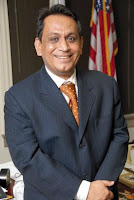 A Los Angeles Times search of public records found that, in the last six years, state Sen. Gil Cedillo spent $125,000 out of his campaign funds for fancy hotels, expensive meals and extravagant shopping sprees. Cedillo is running for the congressional seat recently vacated by Labor Secretary Hilda Solis.
From the LAT:
Cedillo's expenses include $7,022 at Nordstrom; $3,483 at Banana Republic; $1,418 at Ann Taylor; $498 at Bloomingdale's; $450 at Crate & Barrel; and $375 at Macy's.Cedillo told the Times that all of the items he bought were gifts for others and called his many overseas excursions "relevant to the extent that they enrich my capacity as a legislator." Good government advocated Bob Stern said "it sounds like he is using campaign funds to supplement his lifestyle."
-snip-
All told, Cedillo has spent about $77,000 on restaurants, $29,000 on hotels and $21,000 on airline tickets over six years in the Senate. (That does not include tens of thousands of dollars spent on fundraising events at restaurants, hotels or banquet halls.)
The restaurant charges that Cedillo reported as meetings, office or travel expenses include $424 at Ristorante Buca Mario in Florence; $298 at Ristorante San Francesco in Assisi, Italy; $501 at Emporio da Gula in Foz do Iguacu, Brazil; and in Los Angeles, $964 at Cicada; $559 at La Serenata de Garibaldi; $229 at Blair's; and $1,373 at the Palm.
Apr 10, 2009
ESOP fable
The U.S. Department of Labor is investigating the employee stock ownership plan, or ESOP, real estate mogul Sam Zell used to buy Tribune Co., it was revealed Thursday in bankruptcy court. From the Wall Street Journal:
The plan borrowed the billions of dollars used to finance the deal and in turn received all of Tribune's common shares. The company has said the value and fate of the ESOP will be determined in bankruptcy court, though stock is typically wiped out in the bankruptcy process.The ESOP deal is also the subject of a class-action lawsuit filed by current and former staffers at the Los Angeles Times. (WSJ via LA Observed)
Is YouTube going down the tubes?
 If the ubiquitous YouTube can't turn a profit - if billions of eyeballs and Google's best efforts at monetizing popular content can't turn a profit - then what chance do newspapers have at turning popularity, a strong brand name, interactivity and free online content into a solid moneymaking venture?
From the Silicon Alley Insider:
Credit Suisse estimates YouTube will manage to rake in about $240 million in ad revenue in 2009, against operating costs of roughly $711 million, leading to a shortfall of just over $470 million. This half-billion dollar loss comes after more than a year of feverish experimentation in various forms of advertising, cross-product embedding, licensing and partnership deals. YouTube is adamant that ultimately they’ll find an advertising solution that will enable the ungainly behemoth to reach profitability. Looking at the math, it doesn’t seem likely.So what can Google do to turn the financial picture around?:
That last bit sounds an awful lot like what newspaper companies are being encouraged to do.Google could take a lesson from its neighbor, Hulu, and focus only on proprietary content with existing consumer loyalty and real monetization prospects. With its massive audience, this is a viable option, and a direction in which YouTube has already taken some baby steps. Axing user-generated content would seem to be anathema given the site’s roots, but it may be the surest way of putting the business into the black.
Alternatively, YouTube could implement a subscription structure for the site, either monetizing certain members-only content, or requiring users to create a paid account in order to contribute content. With so many marketers looking at YouTube as part of their viral strategy, this too could be a viable option.
Tucson Citizen observed
The Tucson Citizen has a few hazy details about a couple potential bidders for the Arizona paper (Gannett put the Citizen on the market in January and threatened to shut it down in March). According to the Citizen, the publishers of two small Southern California newspapers, the Culver City Observer and Santa Monica Observer, claim to have signed confidentiality agreements with Gannett, and the Culver City publisher has put an ad on Craigslist for Arizona newspaper advertising sales people. It's left unclear whether they've made serious offers for the paper, or simply made inquiries about buying some of the pieces if it implodes - legal and classified accounts, for instance. A quick scan of the respective Observer websites - not sure if they're related in any way - shows neither has much in the way of news resources. (Citizen story via Romenesko)
More MediaNews departures
Sacramento lawmakers will soon have one fewer pair of eyes watching their shenanigans. San Jose Mercury News reporter Edwin Garcia is leaving May 1 to take a PR job at Kaiser Permanente. "It's going to be a wild ride for those who remain in the industry," Garcia told Shane Goldmacher at Capitol Alert.
I'm told Michael Moreno, the cool ad guy with the candy jar, has been laid off as part of the continuing cutbacks in LANG.
I'm told Michael Moreno, the cool ad guy with the candy jar, has been laid off as part of the continuing cutbacks in LANG.
Fake news generates real coverage
The Los Angeles Times ran a real story in today's business section about a fake story that made yesterday's front-page touting a new NBC television show called Southland.
I'd never heard of Southland until this dust up, which indicates to me that the ad has proven to be fairly effective. I wonder how much of the "significant premium" Publisher Eddy Hartenstein charged NBC for A1 placement went toward the predictable controversy and the media attention that be generated as a result?
A journalism professor tells the Times why fake news stories are ethically troubling:
I'd never heard of Southland until this dust up, which indicates to me that the ad has proven to be fairly effective. I wonder how much of the "significant premium" Publisher Eddy Hartenstein charged NBC for A1 placement went toward the predictable controversy and the media attention that be generated as a result?
A journalism professor tells the Times why fake news stories are ethically troubling:
"It's unwise and ethically problematic to have advertising morph into news content and style," said Bob Steele, a journalism values scholar at the Poynter Institute and a professor at DePauw University. "Each step may seem like a small one. But each time you cut a corner, you create weakness in the overall product."And expect more controversy, and more media attention, from another ad in the Times for another dramatic production:
Staff members also objected to an advertising supplement scheduled to run with Sunday's Calendar section. The four-page section promotes the film "The Soloist," which is based on a series of articles by Times columnist Steve Lopez. Although labeled as an ad supplement, the section's typography and layout mimic those of a regular Times news section.LAT, LAO, fishbowlLA, WSJ, NYT
Apr 9, 2009
A1 advertorialization at LA Times
The Los Angeles Times is "innovating" with a fake-story front-page ad for a television series on NBC called Southland. Click the link to see a screen shot.
Apr 8, 2009
In his own words
 I asked open-government activist Richard McKee to write a guest column explaining why he stood up in court to defend the public's right to hear what an "oddball" member of the Orange Unified School Board had to say at a public meeting. The court ruled against McKee, saying the school district had a right to censor the oddball, and slapped McKee with an $86,000 fine.
It's a case that should send a chill up every watchdog's spine.
Here's a portion of what he wrote (the entire column is here):
In essence, the court said a government agency can cut out any information from its publications that might cast it’s decisions in a bad light, and the agency can take any action it wants to discourage elected officials from criticizing administrative decisions.Click here to read the entire column.
America’s republican form of government – of, by, and for the people – presupposes that the public will be kept informed as to the issues its government faces and retains the right to instruct their representatives as to the best course of action.
When the courts endorse the government’s right to limit or control the information it provides to the public, they allow the government to control the outcome of decision-making (i.e., Iraq has weapons of mass destruction).
Justice Oliver Wendell Holmes first described the rational for protections meant to ensure an open marketplace of ideas: “The best test of truth is the power of the thought to get itself accepted in the competition of the market, and that truth is the only ground upon which [people’s] wishes safely can be carried out.”By its opinion in Californians Aware v. Orange Unified School District..., the Fourth District Court of Appeals authorized school boards to distribute to the public: state test score summaries absent scores from under-performing schools, tapes of board meetings with all of the negative public comments deleted, and financial reports with evidence of any fraud removed.
The concern here is historically simple. Those holding power don’t always have our best interests at heart; and power is protected by controlling what information is released.
In a public forum, government speech should never trump individual speech rights. And government speech must never include the selective release of information meant to mislead the public.
Apr 7, 2009
Budget cuts raise concerns for NPR stations*
The Wall Street Journal reports on a growing rift between National Public Radio and its member stations over NPR's recent decision to cut its radio programming while making investments in its online operations.
The Journal quotes an email written by KCRW General Manager Ruth Seymour, who expresses concerns that the cash-strapped NPR is veering away from its commitment to radio, and hurting member stations in the process:
The Journal quotes an email written by KCRW General Manager Ruth Seymour, who expresses concerns that the cash-strapped NPR is veering away from its commitment to radio, and hurting member stations in the process:
Faced with a $23 million deficit, NPR recently instituted layoffs and canceled its West Coast shows "Day to Day" and "News and Notes." Member stations worry that other programs could suffer, too, which in turn could cost them when fund-raising season comes around. They also took issue with statement made at an NPR staff meeting that member station could raise funds directly for NPR. From the WSJ:The most baffling and egregious development is NPR's firing journalists at the same time as it appears to be hiring more online staff. Experienced broadcast journalists -- like John McChesney, Jacki Lydon, Kim Masters -- were let go. Since that time the network has posted at least five online jobs.
Moreover, NPR's lack of interest in producing new programs for radio is alarming. Radio is our core business and our greatest achievement. Now some of the most gifted independent producers tell me that they are bypassing NPR and distributing their programs elsewhere. This is an ominous portent for the future of our network.
Those of us who venerate broadcast journalism and believe that it is our central mission (and I count you among us) are dismayed by these developments.
Some member stations fear NPR budget cuts might hurt the quality of marquee public radio shows "Morning Edition" and "All Things Considered," making it harder for local stations to raise funds during those shows, which typically bring in the lion's share of listener donations and corporate underwriting...*Note: I should make clear that I am a producer at KCRW (see bio in right hand column). I have no say or role in station management and learned about this story from reading the Wall Street Journal.
Currently, station fund drives raise money for the stations themselves, although some of the money goes toward dues to NPR for its programming.
Pruning in Palo Alto
Meanwhile, in Northern California...
The MediaNews-owned Palo Alto Daily News has dropped its Sunday edition and will now publish only five days a week (Tue.-Sat.). It will also eliminate its three zoned editions.
The MediaNews-owned Palo Alto Daily News has dropped its Sunday edition and will now publish only five days a week (Tue.-Sat.). It will also eliminate its three zoned editions.
Behavioral-science politics
The Obama campaign enlisted some top names in the field of behavioral science to help craft its winning message, and now the Obama White House is doing the same in crafting policy. Michael Grunwald of Time magazine has the story:
It's no coincidence that Obama's budget proposes an ambitious program of automatic-enrollment pensions for workplaces that don't offer 401(k)s or that his stimulus package has billions of dollars for smart meters. Behavioral science — especially the burgeoning field of behavioral economics that has been popularized by Freakonomics, The Wisdom of Crowds, Predictably Irrational, Nudge and Animal Spirits, which is the new must-read in Obamaworld — is already shaping dozens of Administration policies. "It really applies to all the big areas where we need change," says Obama budget director Peter Orszag.
Guerrila journalism
The head of Thomson Reuters wondered aloud why the New York Times needs 700 journalists to cover the world - Why not 30 journeymen journalists with 30 apprentices? I'm sure CEO Tom Glocer has no financial interests in shrinking the New York Times, but if he feels so strongly about the idea of asymmetrical coverage, maybe he should go first. (via Romenesko)
Working out with Dean Singleton
It's hard to find anyone bullish about the newspaper industry, which makes the news out last week that MediaNews had negotiated forbearance agreements with its major creditors well worth watching. Unless lenders have confidence that a company will pay its bills in full and won't slip into arrears again, they are going to expect something in return for granting a delay in its payments.
Martin Langeveld at Nieman Journalism Lab thinks the forbearance deal might be the start of a restructuring process. The lenders will first demand MediaNews pay off as much of its loan as possible and then will want to see a plan that ensures the newspaper chain won't default again. Langeveld writes:
Whether these are the right solutions is open for debate. But it does seem as if Singleton is out of options to contain the bleeding. He's already cut staff to the bone at most papers, outsourced customer care, canceled benefits, forced furloughs and, in Southern California, consolidated copy desks and frozen vacation time.
I asked Ron Kaye, former editor of the Los Angeles Daily News, what he thought might be next for the LANG papers - which have already suffered the worst of the cutbacks and have little left to give. His answer took me aback. Kaye's convinced Singleton will leave California - and soon. He surmises MediaNews will do deals with Belo, Hearst and the Los Angeles Times to unload its properties and then diminish to the East.
"Every way I look at it, he'll be out of SoCal by the end of June," Kaye said. "I can't see any other story line, for what it's worth."
MediaNews has said nothing to indicate it wants leave California. To the contrary, the company has announced plans to test its new "I-News" system at the Daily News this summer. So it may be too early to forecast a flight from California, but with the constant chatter out of the LANG offices that "everything's on the table," the workout MediaNews is undergoing with its creditors is indeed well worth watching.
Martin Langeveld at Nieman Journalism Lab thinks the forbearance deal might be the start of a restructuring process. The lenders will first demand MediaNews pay off as much of its loan as possible and then will want to see a plan that ensures the newspaper chain won't default again. Langeveld writes:
This confirms that MediaNews is in default — forbearance agreements are designed to postpone foreclosure, and lenders don’t threaten to foreclose unless the borrower is in default of one or more loan covenants. Covenants breaches can entail failure to maintain certain balance sheet ratios rather than actually being short of cash, but they’re serious issues and call into question the ability of the enterprise to maintain its “going concern” status...Langeveld has his own list of solutions - from selling off printing plants and real-estate holdings (LANG is a pioneer on this front), to cutting production at most papers to one or two days a week, to launching commuter tabloids in busy markets such as Salt Lake City, Denver and the Bay Area.
So, how do you restructure $1 billion in debt? The workout team at Bank of America will be looking for cash — as much cash as the banks can get to pay down the notes. Ultimately, the banks may need to take a haircut (write down the value of the loan), but first they’ll squeeze as much cash out as can be gotten. Usually in these situations, cash is raised by selling assets, but MediaNews’ assets consist mainly of newspapers, and newspaper buyers are non-existent today, for all practical purposes. The banks know this, Dean Singleton knows this, so what’s the solution?
Whether these are the right solutions is open for debate. But it does seem as if Singleton is out of options to contain the bleeding. He's already cut staff to the bone at most papers, outsourced customer care, canceled benefits, forced furloughs and, in Southern California, consolidated copy desks and frozen vacation time.
I asked Ron Kaye, former editor of the Los Angeles Daily News, what he thought might be next for the LANG papers - which have already suffered the worst of the cutbacks and have little left to give. His answer took me aback. Kaye's convinced Singleton will leave California - and soon. He surmises MediaNews will do deals with Belo, Hearst and the Los Angeles Times to unload its properties and then diminish to the East.
"Every way I look at it, he'll be out of SoCal by the end of June," Kaye said. "I can't see any other story line, for what it's worth."
MediaNews has said nothing to indicate it wants leave California. To the contrary, the company has announced plans to test its new "I-News" system at the Daily News this summer. So it may be too early to forecast a flight from California, but with the constant chatter out of the LANG offices that "everything's on the table," the workout MediaNews is undergoing with its creditors is indeed well worth watching.
Apr 6, 2009
Universal copy desk*
I'm told April 20 is the day copy editors for the Los Angeles Daily News, Torrance Daily Breeze, and Long Beach Press-Telegram will begin making the commute to West Covina to work on LANG's new universal copy desk. Not everyone is going, of course. Some editors decided to take buyouts rather than make the move.
The six papers that make up LANG's Inland Division merged desks in January.
*Update: In regards to consolidated copy desks, remember when Dean Singleton said this?: "One thing we're exploring is having one news desk for all of our newspapers in MediaNews ... maybe even offshore."
The six papers that make up LANG's Inland Division merged desks in January.
*Update: In regards to consolidated copy desks, remember when Dean Singleton said this?: "One thing we're exploring is having one news desk for all of our newspapers in MediaNews ... maybe even offshore."
AP wants to be asked (and paid)
The Associated Press says it will take legal action to block websites from using the work of AP or its member papers without first obtaining permission. From the New York Times:
Associated Press executives said the policy was aimed at major search engines like Google, Yahoo and their competitors, and also at news aggregators like the Huffington Post, as well as companies that sell packaged news services. They said they do not want to stop the appearance of articles around the Web, but to exercise some control over it and to profit from it. The A.P. also said it is developing a system to track news articles online and determine whether they were used legally.
-snip-
“The A.P. is trying to assert its value to the member newspapers,” by shifting the industry discussion “from fair use to fair share,” said Ken Doctor, an analyst at Outsell, a media research firm.
Apr 5, 2009
His favorite year
"Without a doubt, this was the best year of my life," writes citizen-blogger Ron Kaye, as he marks the one-year anniversary of his getting fired as editor of the Los Angeles Daily News:
Only now, after a year without the armor of a job, a year as just another ordinary citizen fighting City Hall, am I getting a glimmer of what LA is really about.The rejuvenated Kaye sees big changes coming to LA, but he doesn't think his old paper will survive long enough to see them:
It's as simple as happiness.
All the struggles and handwringing, all the lawsuits and protests, are about the failure of our city leaders to provide the environment we need to find our own happiness.
The newsroom I left behind is now barely half the size it was when I was fired. I don't see how it can survive and that breaks my heart because of the pain it causes my colleagues and for the loss it means to the community.Read his complete post here.
Apr 3, 2009
Trancontinental trouble*
Taking a page from the Hearst Corp. playbook, the New York Times Company has threatened to close the Boston Globe unless the unions there agree to $20 million worth of concessions. This is likely to mean pay cuts and an end to pension benefits.
As with Hearst's San Francisco Chronicle, the Globe is reportedly bleeding cash:
*Update: News reports of the impending death of the Boston Globe (including the one in the Boston Globe) are greatly exaggerated, according to Alan Mutter.
As with Hearst's San Francisco Chronicle, the Globe is reportedly bleeding cash:
Earlier this week, the Globe newsroom completed cutting the equivalent of 50 full-time jobs. But the deteriorating economy has made the paper's financial outlook much worse. Management told union leaders Thursday that the Globe will lose $85 million in 2009, unless serious cutbacks are made, according to a Globe employee briefed on the discussions. Last year the paper lost an estimated $50 million, the employee said.(h/t Romenesko)
*Update: News reports of the impending death of the Boston Globe (including the one in the Boston Globe) are greatly exaggerated, according to Alan Mutter.
So who's staying?
At least 120 employees have applied for buyouts at the beleaguered San Francisco Chronicle. Owner Hearst set a goal of cutting 150 positions. Frances Dinkelspiel at Ghost Word has an updated list of Chronicle journalists who have decided to leave.
Gosselin writing for Geithner
I missed this when it was first reported... Peter Gosselin, long-time economics reporter for the Los Angeles Times and author of “High Wire: The Precarious Financial Lives of American Families," left his job at the paper in February to become chief speechwriter for Treasury Secretary Timothy Geithner.
Sun is hiring
The San Bernardino Sun is hiring a political reporter, presumably to help fill a gap left by Metro Editor George Watson, who is leaving to become chief of staff to a SB County Supervisor. The job description calls for someone who can break state and national news while "developing enterprise and investigative lines of reporting on the local impact of government actions in Sacramento and Washington, D.C." while "reporting on local governments (city and county) in collaboration with reporters assigned to those beats."
MediaNews makes deal on debt
The New York Times reports that MediaNews Group has made a deal with lenders to delay a principal payment on its debt. From the NYT:
In its forebearance agreement with its banks, led by Bank of America, MediaNews will forgo payments while it attempts to reorganize its capital structure, the people briefed on the matter said. The move will also help preserve the publisher’s cash.Note: I'd previously linked to a Wall Street Journal story here, but decided the Times story had more relevant information.MediaNews has worked out a similar agreement with Hearst, which owns a big stake in the publisher’s equity and a majority position in its bonds. (Hearst also owns the hugely unprofitable San Francisco Chronicle, which it has threatened to sell or shut down if it cannot cut labor costs quickly.)
Apr 2, 2009
State of the Statehouse coverage
An America Journalism Review survey makes an unsurprising finding - the number of statehouse reporters is down sharply:
This winter, AJR conducted its fifth census of newspaper reporters who cover state government, its first since 2003, and found a staggering loss of reporting firepower at America's state capitols.The tally found only 355 full-time newspaper reporters at the nation's state capitols, a 32 percent decrease from just six years ago. It discovered that 44 statehouses have fewer full-time reporters than they did six years ago. The number of full-time reporters remained the same in four states and increased modestly in two.
-snip-
In California, eight of 15 newspapers have cut back on Capitol coverage. The state, which has one of the nation's worst budget crises, had 40 full-time newspaper reporters at the statehouse in 2003. That number has fallen to 29.
LANG freezes employee vacation time*
After being forced to take a week's worth of unpaid leave, LANG employees will now lose out on some of their paid vacation. According to a memo from Inland Division Publisher Fred Hamilton, employees will no longer accrue vacation time starting April 5. The suspension will last through July 4.
Here's the Hamilton memo:
The union representing workers at the Daily News and Press-Telegram says the freeze won't apply to its members.
*Update: Jim Janiga, LANG's head of human resources, sent out a memo (read it here) that provides a general sense of how much vacation time will be lost. (via LA Observed)
Here's the Hamilton memo:
Colleagues,An almost identical memo went out to the other LANG newspapers.
Tomorrow and for some later today, along with your paycheck, you'll be receiving a letter about another step our newspapers are taking to tackle the difficult economic challenges that we are facing.
In short, we'll be suspending accrual of employee vacation time from April 5, 2009 through July 4, 2009. The letter will go into specifics and our human resource VP Louise Kopitch is available to answer your questions.
I want to let you know that I truly appreciate all the additional sacrifices and hard work that all employees have made during these unprecedented times.
Fred Hamilton
Publisher
The union representing workers at the Daily News and Press-Telegram says the freeze won't apply to its members.
*Update: Jim Janiga, LANG's head of human resources, sent out a memo (read it here) that provides a general sense of how much vacation time will be lost. (via LA Observed)
Getting distracted
There's distraction journalism and then there's plain distraction. The second of the "top stories" on today's Daily News home page asks readers to "take a break from the news and have some fun," with a game of flash arcade solitaire.
Four in the afternoon
Belo to cut salaries, freeze pensions
AH Belo, the parent company of the Riverside Press-Enterprise and Dallas Morning News, announced today that starting May 1 it will cut the salaries of all workers making over $25,000 and eliminate annual pension contributions for 2009.
According to the memo from CEO Richard Decherd, salary cuts will made on a sliding scale:
According to the memo from CEO Richard Decherd, salary cuts will made on a sliding scale:
$25,000 and under 0 %As the New York Times did when it announced pay cuts last week, Belo will "give" employees days off in exchange for the smaller paycheck. But the company calls the unpaid a "cushion" rather than a furlough:
$25,001 - $74,999 2.5 %
$75,000 - $102,499 5.0 %
$102,500 - $149,999 7.5 %
$150,000 - $225,000 10 %
Over $225,000 15 %
Our hope is to restore most or all of these cuts for impacted employees at some time in the future, as business conditions permit. To cushion the impact of the wage cuts, all impacted employees will receive three additional personal days per calendar year, effective at the time of the salary reductions.Belo expects to save $16 million annually between the pension freeze and the salary cuts. Read the full memo from Decherd here.
Subscribe to:
Posts (Atom)

 Posts
Posts


